Between 2019 and 2024, the share of Indians who reported reading for leisure fell from 5.4 per cent to 4 per cent. That is the headline finding from India's Time Use Survey, analysed by NCAER researchers Palash Baruah and DL Wankhar in February 2026. A 1.4 percentage-point drop sounds small until you scale it against 1.4 billion people: it means millions of Indians have stopped being readers entirely, in five years.
The more interesting half of the finding is the one that got less attention. Among the people who did keep reading, reading time went up. This piece walks through what the data actually says, why the diagnosis matters, and — because we sell books for a living and would rather be useful than alarmed — what to actually read if you want to stay in the shrinking group that still reads.
What the Time Use Survey Actually Found
- Participation fell across the board. Leisure reading dropped from 5.4 per cent of Indians in 2019 to 4 per cent in 2024. NCAER calls it a structural shift that cuts across age, gender and geography — not a fad.
- The remaining readers read longer. Women average 69.1 minutes a day, children 77.1 minutes and adolescents 74.5 minutes — all higher than five years earlier. The habit did not weaken; the population holding it got smaller.
- Working-age adults were hit hardest. The steepest erosion is among adults in their twenties to fifties, squeezed by long work hours, unstable employment and multi-hour urban commutes.
- Women dropped out fastest. Female participation fell from 3.5 per cent in 2019 to 2.2 per cent in 2024 — even though women who read spend more time on it (about 69 minutes) than men (about 57 minutes).
- Even the elderly slipped. Traditionally India's most committed readers, older adults showed both lower participation and less time spent between 2019 and 2024.
The one line worth remembering
It Is a Time Crisis, Not a Taste Crisis
This distinction changes what you do about it. If Indians had simply stopped liking books, the answer would be better books, better marketing, more literary festivals. But the data points somewhere else: leisure itself has fragmented. Reading needs a sustained cognitive stretch, so it is the first activity to fall out of a day chopped into ten-minute gaps. What fills those gaps is passive screen consumption — Reels and Shorts engineered, as the NCAER piece puts it, to deliver dopamine in seconds-long intervals to an already exhausted mind.
The gender split makes the structural argument hard to dismiss. Women read for longer than men when they get the chance, and they are the group least likely to still be reading at all. Reading, in 2026 India, survives mainly among people who can protect uninterrupted personal time — and that is not distributed equally.
So Why Are Book Sales Rising?
Because buying books and having time to read them are different things. The 49th International Kolkata Book Fair, which ran from 22 January to 3 February 2026, drew around 32 lakh visitors and roughly ₹27 crore in book sales — up about 15 per cent on the previous year's 27 lakh visitors and ₹25 crore. Ukraine took part for the first time and China returned after a fifteen-year gap. Alongside that, Gen Z readers in India have made reading visible and social: Bookstagram, WhatsApp book clubs, silent reading meetups, collector's editions bought as objects.
Both things are true at once. A smaller, younger, more urban, more visible reading class is buying more books and reading them intensely, while the broad middle of the country quietly falls out of the habit. The market looks healthy. The base is thinning.
A society that stops reading tends to drift towards fragmented information and polarised, shallow engagement. When the book disappears, the public sphere becomes poorer. — Palash Baruah and DL Wankhar, NCAER, February 2026
How to Stay in the Reading Class When You Have No Time
The policy answer is about work hours, commutes and the right to disconnect, and it is not in your hands this week. The personal answer is smaller and does work: stop trying to reclaim hours you do not have, and start designing for the fragments you do.
1. Choose books built for fragmented time
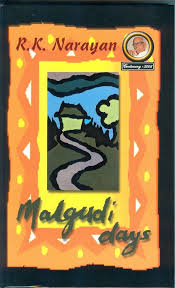
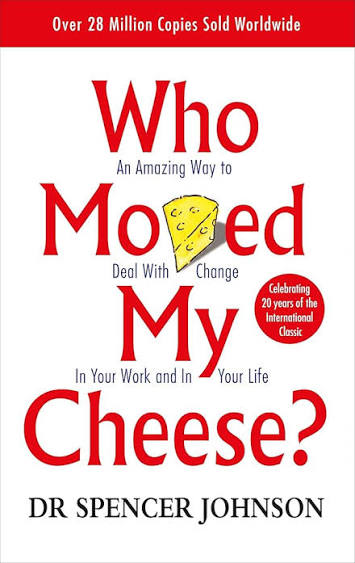
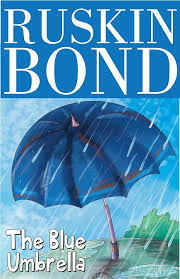
If your day only offers ten-minute windows, pick books with ten-minute units. Short-story collections and slim books finish; 600-page doorstops become guilt. Malgudi Days by R.K. Narayan is the best example in Indian writing — each story is complete in a chai break, and the whole book survives being read out of order. Who Moved My Cheese? takes under an hour end to end, which makes it a useful way to break a months-long reading drought. For a household with a child in it, The Blue Umbrella by Ruskin Bond is short enough to finish in one sitting and good enough to be re-read.
2. Make the book physically closer than the phone
The survey's implicit point is that the phone wins by default because it is always in your hand. The counter is embarrassingly literal: put a paperback where your hand goes. Bag, bedside, kitchen counter, the seat pocket of the car. The book you read is almost always the book within arm's reach at the moment boredom arrives.
3. Read something that can actually out-compete a Reel
Literary ambition is not a strategy when you are exhausted. A plot-driven book with short chapters and a hook every few pages beats a worthy one you abandon on page 40:
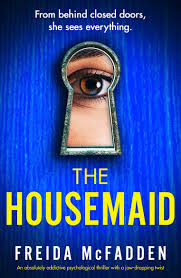
- The Housemaid by Freida McFadden — chapters engineered to end mid-decision. The most reliable habit-restarter we sell.
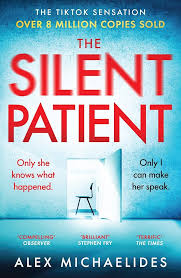
- The Silent Patient by Alex Michaelides — a psychological thriller with a twist that people genuinely do not see coming.
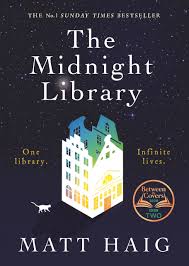
- The Midnight Library by Matt Haig — short chapters, one clean idea, and the rare page-turner that leaves you calmer than it found you.
4. Convert the commute the data blames for all this
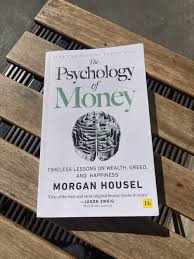
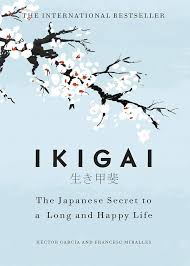
NCAER singles out multi-hour commuting as one of the forces eating leisure. If you are on a metro, a bus or the passenger seat of a cab, that is dead time already lost — and it is roughly the 60-minute block the surviving readers are using. Non-fiction with self-contained chapters handles interruption well: The Psychology of Money by Morgan Housel is twenty short essays, each finishable in a single leg of a journey. Ikigai is light enough for a tired evening ride. Man's Search for Meaning by Viktor Frankl is under 200 pages and is the book most likely to make you reconsider what you are doing with your hours.
5. Repair the attention, not just the calendar
If you sit down with a book and cannot hold a page, the problem is upstream of your schedule. Four books that address it directly:
- Deep Work by Cal Newport — the clearest case for why fragmented attention is a professional liability, not just a private annoyance.
- Atomic Habits by James Clear — the mechanics of making twenty minutes of reading automatic instead of aspirational.
- The Art of Clarity by Murthy Thevar — on cutting mental noise so that sustained thought becomes possible again. Written for exactly the overloaded working reader this data describes.
- The Let Them Theory by Mel Robbins — a 2026 bestseller about reclaiming the attention you spend managing other people.
Protect the Readers Already in Your House
The most actionable number in the whole survey is this: children read 77.1 minutes a day and adolescents 74.5 minutes — more than adults, and more than children did five years ago. Reading habits formed in school tend to hold for life, which makes the household the highest-leverage place to act. Keep the supply coming and stay out of the way. Grandma's Bag of Stories by Sudha Murty works for readers around eight to twelve and reads aloud well. Wings of Fire by A.P.J. Abdul Kalam remains the book most likely to convert an Indian teenager who thinks books are homework. Note the pattern in both: the child picks, the adult supplies.
And One Novel That Rewards the Deep Dive
Everything above is triage. But the reason any of this matters is the experience the survey is measuring the loss of — sustained, absorbed, uninterrupted reading. If you get one long weekend this year, spend it on The God of Small Things by Arundhati Roy. It is a 1997 Booker Prize winner, it cannot be skimmed, and finishing it is the clearest proof available that your attention is still intact.
Cost is not the barrier — time is
Four per cent is a bleak number, but it is a number about participation, not about capacity. The readers who remain are reading more than ever, which means the habit has not become harder to hold — only harder to start. Twenty minutes and one book within arm's reach is the entire entry requirement.