Krishna Janmashtami falls on Friday, 4 September 2026. Ashtami Tithi begins at 10:48 AM on 4 September and ends at 11:23 AM on 5 September, which places the Nishita Kaal window — the midnight hour of Krishna's birth — at roughly 11:57 PM to 12:43 AM for North Indian longitudes. Fasting households break the vrat, or parana, after 11:23 AM on 5 September. Those midnight timings shift measurably east to west: Kolkata's Nishita period runs closer to 11:13 PM to 11:59 PM, so a local panchang is worth checking rather than a national one.
That is the calendar. The more interesting question, and the one that arrives every year in Indian households around this week, is the one nobody quite answers: if you actually wanted to read about Krishna — not just fast, decorate a jhula and queue at a temple — where would you begin?
It is a harder question than it looks, and the difficulty is the reason most people give up. This is a guide to answering it properly, in the order that works.
Janmashtami 2026 at a glance
Why Krishna Is the Hardest Indian Figure to Start Reading About
Most gods in most traditions have one book. Krishna has at least four, and they do not agree with each other about who he is.
The butter-stealing child of Gokul, the flute player of Vrindavan and the Ras Leela come mainly from the Bhagavata Purana and the Harivamsa. The political operator who negotiates, manipulates and occasionally lies his way through a dynastic war comes from the Mahabharata. The philosopher who delivers eighteen chapters of metaphysics to a paralysed archer comes from one small section of that same epic, the Bhagavad Gita. And the romantic Krishna of Radha, who dominates devotional poetry and most Indian painting, is largely a later medieval addition and barely appears in the earliest sources at all.
A reader who opens a full unabridged Mahabharata expecting the flute player will be a thousand pages into a succession dispute before Krishna does anything recognisable. This is why so many well-intentioned Janmashtami book purchases end up unfinished on a shelf. The fix is not more discipline. It is picking the right entry point for the Krishna you are actually curious about.
Start Here: The Gita, Because It Is Krishna Speaking
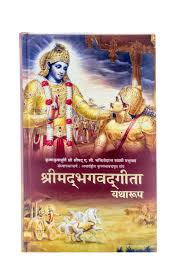
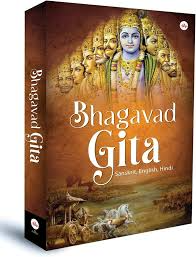
If you read one thing this Janmashtami, read the Bhagavad Gita. It is roughly 700 verses — short enough to finish across the fasting day itself — and it is the only major text where Krishna is not being described by someone else but is talking directly, at length, in his own voice.
Translation matters more here than with almost any other book, because Sanskrit philosophical vocabulary does not map cleanly onto English and every translator makes choices. The Bhagavad Gita in Eknath Easwaran's translation is the standard recommendation for a first reading: it is deliberately plain, avoids sectarian framing, and includes chapter introductions that explain what is being argued before you meet the argument. Readers who want commentary can go deeper later; almost nobody benefits from starting with a heavily annotated edition.
For children — and, honestly, for a large number of adults who have never got past chapter two — The Gita: For Children by Roopa Pai is the better book. It treats the Gita as a conversation between a confused young person and a friend who refuses to give easy answers, which is a defensible reading of the text and a far more inviting one. It is also the single most giftable title on this list for anyone with a school-age reader in the house.
A realistic Janmashtami reading plan
The Mahabharata, Without the Hundred Thousand Verses
The Mahabharata is the world's longest epic poem and the book in which Krishna is most fully himself: strategist, charioteer, kingmaker, and morally slippery in ways devotional literature tends to smooth over. Almost nobody should read it unabridged first.
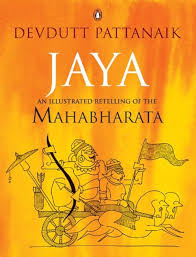
Jaya: An Illustrated Retelling of the Mahabharata by Devdutt Pattanaik is the most efficient way in. It moves chapter by chapter through the whole epic, keeps the line drawings simple, and — its real value — footnotes the regional variations, so you learn that there is no single Mahabharata but dozens of them, differing by state and by century. Most Indian readers finish it having discovered that the version they grew up with was one of many.
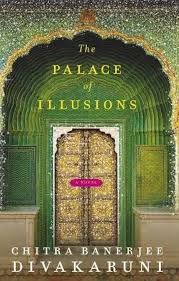
The Palace of Illusions by Chitra Banerjee Divakaruni retells the same events entirely from Draupadi's position, and it is the better book for a reader who wants a novel rather than a summary. Krishna is present throughout as her closest confidant, and the friendship is drawn with more ambiguity than the temple version allows — which is precisely why the book has stayed in print and in reading-group rotation for over fifteen years.
For readers who want the historical and textual argument rather than the story, Mahabharat Unraveled by Amritanshu Pandey works through the epic's internal contradictions, later interpolations and dating questions. Its companion, Ramayan Unraveled, does the same for the other epic. Both are for the second or third year of interest, not the first.
If You Want the Stories, Not the Scripture
There is a whole category of reader who does not want philosophy or an epic and simply wants the tales: the butter theft, the lifting of Govardhan, Kaliya in the Yamuna, the Kalinga forest. These are Purana material, and the Puranas are enormous and repetitive in the original.
Mahagatha: 100 Tales from the Puranas by Satyarth Nayak solves this cleanly — a hundred stories arranged in rough chronological sequence across the cosmic cycles, so you get the Krishna narratives in context rather than as isolated anecdotes. It is the best single-volume answer to the question of what actually happens in Hindu mythology.
Myth = Mythya by Devdutt Pattanaik is the companion argument rather than the stories: why these narratives are structured as they are, what the recurring symbols carry, and why a tradition that tolerates a hundred contradictory versions of the same event is doing something deliberate. Read it after Mahagatha, not before.
For the Ramayana side of the shelf — often bought in the same trip — Sita: An Illustrated Retelling of the Ramayana is the direct counterpart to Jaya, and Ram Sita Raavan takes the shorter, more accessible route through the same material.
Mythological Fiction, for Readers Who Want a Novel
Mythological fiction is now one of the largest commercial categories in Indian publishing, and Janmashtami week is when it moves fastest. The distinction to keep in mind is that these are novels using the source material, not retellings of it — which is a feature, provided you know that going in.
The Immortals of Meluha by Amish Tripathi is the book that opened the category in 2010, reimagining Shiva as a Tibetan tribal chief in a functioning Indus Valley state. If it lands, The Shiva Trilogy Set is the cheaper way to own all three. The Hidden Hindu: Book 1 by Akshat Gupta is the more recent phenomenon — a thriller built on the seven chiranjivi, the immortals of the tradition — and it is the title most likely to convert a non-reader in the family into a reader, which is not a small thing.
What to Gift, by Recipient
- A parent or grandparent who does puja but has never read the text: The Bhagavad Gita, Easwaran translation. It is the gift that most often gets read cover to cover.
- A child aged eight to fourteen: The Gita: For Children by Roopa Pai, or Jaya for a slightly older reader who likes illustrated books.
- A cousin who reads thrillers and claims not to like mythology: The Hidden Hindu: Book 1. Start there, not with an epic.
- A friend in a book club: The Palace of Illusions. It generates more argument per page than almost anything else on this list.
- Someone who has read the retellings and wants the next level: Mahabharat Unraveled, or Mahagatha for breadth over depth.
- A colleague you do not know well: Mahagatha. It is handsome, uncontroversial and genuinely interesting.
Ordering in time for 4 September
The Fasting-Day Shelf: Books That Are Not About Krishna
A fasting day is, practically speaking, several unusually quiet hours. Not everyone wants to spend them on scripture, and there is no rule saying you must.
Autobiography of a Yogi by Paramahansa Yogananda sits closest to the occasion without being a religious text — it is a memoir, and it is the book that has introduced more readers outside India to Indian spiritual thought than any other. Wings of Fire by A.P.J. Abdul Kalam belongs in the same slot for a different reason: it is the most-gifted Indian memoir of the last three decades and it reads in two sittings.
If the honest problem is that you have not finished a book in months and a festival day is the excuse to restart, the fix is attention rather than subject matter. The Art of Clarity by Murthy Thevar is about that specific failure — thinking that has been trained to fragment — and its chapters are deliberately short enough to rebuild a reading habit on. The Alchemist works for the same purpose from the fiction side, and Ikigai is the non-fiction title most readers actually finish. For anyone who prefers to end the day with something practical rather than philosophical, The Psychology of Money is the safest recommendation on the shelf.
The Gita is 700 verses long. The Mahabharata is a hundred thousand. Almost everyone starts with the second and finishes neither. Start with the one Krishna narrates himself.
One book, chosen for the Krishna you are actually curious about, finished by the end of September. That is a better Janmashtami than four unread volumes bought in a hurry on the third — and it is the version of the festival that is still doing something for you in October.