On 3 September 2026, NielsenIQ BookData and the Federation of Indian Publishers released The India Book Market Report 2026-30 - the first full edition since 2022. The headline number is the one that will get quoted everywhere: India's book publishing market is projected to reach $21 billion by 2030-31. India is already the third-largest publishing market in the world, behind only the United States and China.
Industry reports are usually written for people who sell books, not people who read them. This one is worth reading sideways, because almost every finding in it has a direct consequence for what you will find on a shelf, what it will cost, and which languages it will be available in over the next four years. Here is the translation.
The India Book Market Report 2026-30: the numbers
Print Did Not Lose. That Is the Real Story
Look at the split. Print is roughly $10.1 billion. Digital is roughly $700 million. That is a ratio of about fourteen to one, in a country with the cheapest mobile data on earth and a smartphone in almost every hand. Every prediction made a decade ago about the paperback dying in India has simply not happened.
The report's executive summary puts it more carefully than the usual framing allows. The important story, it notes, is not a simple shift from print to digital - it is the development of a more connected knowledge industry in which print, digital, audio, accessible content, translation, assessment, licensing and research publishing all work together. That is a considerably more interesting claim than print-versus-screen, and it matches what readers actually do: listen to an audiobook on a commute, buy the paperback of the one they loved, borrow the sequel.
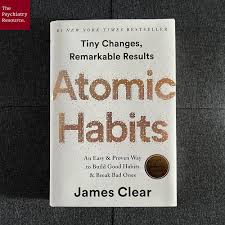
For a reader, the practical takeaway is boring and good. The physical book is not a nostalgia purchase in India. It is the format the market is built on, which is why a paperback of The Alchemist or Atomic Habits still costs a fraction of what the same title costs almost anywhere else in the world.
Education Is the Foundation, But Trade Is Where the Growth Is
The report is direct about this: education remains the foundation of Indian publishing, but the sector is broadening. Growth is emerging in trade books, children's content, professional learning, Indian-language publishing, research and lifelong learning.
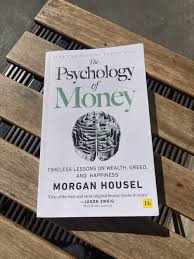
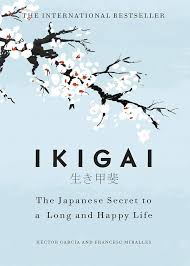
Anyone who has watched a bookshop in a tier-two Indian city over the last five years already knew this. The textbook table is still the one that pays the rent. But the fiction shelf has stopped being an afterthought, and the self-improvement shelf has quietly become the largest in the shop. Titles like The Psychology of Money by Morgan Housel and Ikigai by Hector Garcia and Francesc Miralles sell in volumes that would have been reserved for a competitive-exam guide fifteen years ago.
A country stops being a market for textbooks and starts being a market for books at the moment reading survives the last exam.
That transition is exactly what the phrase "lifelong learning" in the report is measuring. It is the reader who finished a degree, kept the habit, and now buys four books a year for no reason other than wanting to. In publishing terms, that reader is worth more over a lifetime than any single syllabus.
Indian-Language Publishing Is Named as a Growth Area
This is the finding with the longest tail. Indian-language publishing appears in the report as one of the specific areas where growth is emerging, alongside translation as one of the routes by which India can expand its international presence.
Two things follow from that. First, more books originally written in Hindi, Tamil, Bengali, Malayalam, Marathi and Kannada will be translated into English and sold to readers who cannot read the original. Second, and less obviously, more English-language books will be translated the other way, into Indian languages, because the economics of doing so keep improving as digital distribution lowers the cost of a small print run.
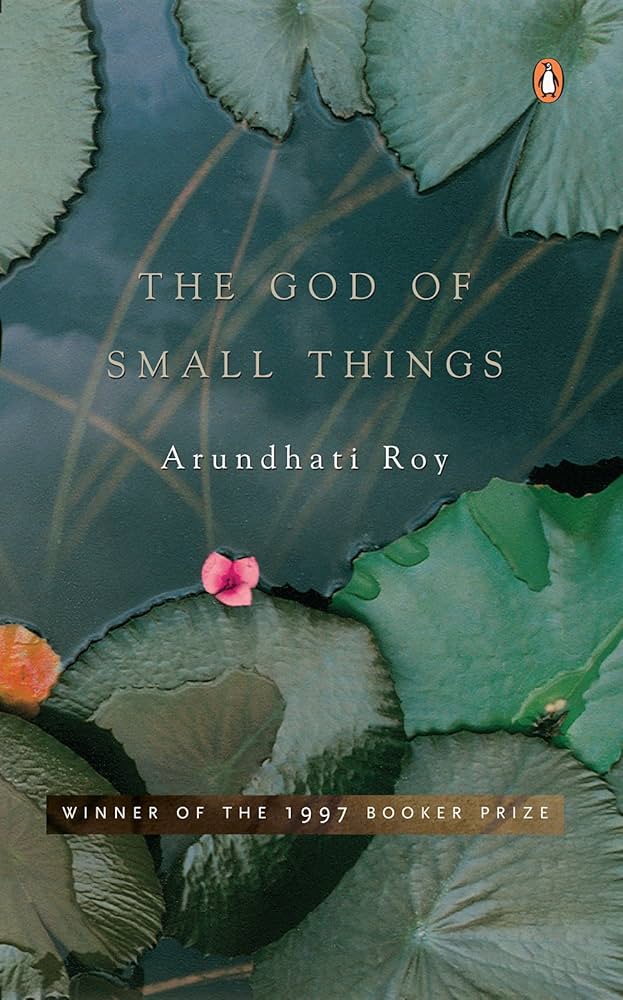
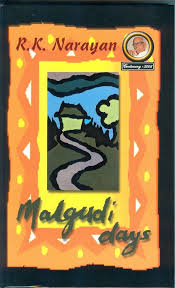
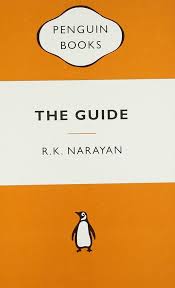
If you want to understand why this matters, read the books that already crossed over. The God of Small Things by Arundhati Roy won the Booker in 1997 and is still the clearest demonstration of what an Indian novel in English can do with the rhythm of a regional language underneath it. Malgudi Days and The Guide by R. K. Narayan did it forty years earlier, quietly, and have never gone out of print in either direction.
Children's Content Gets Its Own Line Item
It is easy to skip past, but the report lists children's content as a distinct growth area rather than folding it into education. That distinction is the entire argument. A children's book that exists to teach is a textbook. A children's book that exists to be enjoyed is the thing that produces an adult reader fifteen years later.
The practical version of this for a parent is simple: buy the series, not the single volume. Reading momentum in a nine-year-old is a real and fragile thing, and it survives best when the next book is already in the house. The Harry Potter Series Set (Books 1-7) and the Diary of a Wimpy Kid Series Set both work for this reason and no other. For a child who wants the Indian stories properly told rather than simplified, Jaya: An Illustrated Retelling of the Mahabharata by Devdutt Pattanaik is the one that respects them enough to keep the difficult parts in.
AI: The Report's Most Careful Paragraph
The report addresses artificial intelligence and does not flinch in either direction. Its position is that AI can improve speed and reach, but that quality, creator rights, privacy and sourcing remain live concerns - and that accuracy and human judgement must remain central.
That is a more useful stance than either of the two loud ones. For a reader, the consequence is that the next four years will produce a lot more books, and a smaller proportion of them will have been through the number of human hands a book used to pass through. Learning to tell the difference is becoming a genuine reading skill rather than a niche interest.
What to check before you buy an unfamiliar title
Fifteen Books That Sit Inside This Story
Reports describe categories. Books are what the categories are made of. These are the titles from the catalogue that map most directly onto what the report is measuring.
Indian writing, translation and the global shelf
- The God of Small Things by Arundhati Roy - the Booker winner that proved an Indian novel in English did not have to explain itself to anyone.
- Malgudi Days by R. K. Narayan - thirty-two short stories in a fictional South Indian town. The best possible argument that ordinary life is enough material.
- The Guide by R. K. Narayan - a tour guide mistaken for a holy man, and too polite to correct anyone. Funnier and sadder than its reputation.
- The Palace of Illusions by Chitra Banerjee Divakaruni - the Mahabharata told by Draupadi. The retelling that changed how a generation of Indian readers approached the epics.
- Jaya: An Illustrated Retelling of the Mahabharata by Devdutt Pattanaik - the accessible entry point, with the regional variations kept rather than smoothed away.
Education, lifelong learning and the reader who kept going
- Wings of Fire by A. P. J. Abdul Kalam - still the book most often named by Indian readers as the one that made them read outside a syllabus.
- Ignited Minds: Unleashing the Power Within India by A. P. J. Abdul Kalam - the follow-up, addressed directly to students, and a useful corrective to cynicism.
- Sapiens: A Brief History of Humankind by Yuval Noah Harari - the book that turned a large number of non-readers into non-fiction readers.
- Deep Work by Cal Newport - on protecting the kind of attention that reading a difficult book requires.
- The Art of Clarity by Murthy Thevar - on thinking and expressing yourself precisely in an environment engineered to scatter you. The most directly useful book here if the problem is that you start books and do not finish them.
Trade fiction and non-fiction, the fastest-growing shelf
- Atomic Habits by James Clear - the single best-selling non-fiction title in India for several years running, and the clearest evidence that trade non-fiction is no longer a niche.
- The Psychology of Money by Morgan Housel - nineteen short chapters on why sensible people make poor financial decisions.
- Ikigai by Hector Garcia and Francesc Miralles - short, calm, and the gateway book for a very large number of Indian readers.
- Lessons in Chemistry by Bonnie Garmus - a chemist becomes a television cook against her will. Commercial fiction with actual teeth.
- The Silent Patient by Alex Michaelides - the thriller that reliably ends a reading slump in one weekend.
Building the shelf without spending much
What This Means If You Just Want to Read More
Strip out the industry framing and the report describes a reading environment that is getting steadily better for the person buying books in India. Five practical consequences:
- Availability will keep improving faster than price. A market growing towards $21 billion competes on catalogue depth and delivery, not on charging more for a paperback. Backlist titles that used to be hard to find in India are increasingly not.
- Expect the translated shelf to double. If Indian-language publishing and translation are both named growth areas, the books you cannot currently read in your language are the ones most likely to arrive next.
- Audio is a companion, not a replacement. At roughly $700 million against $10.1 billion in print, digital in India is additive. Use it for the commute and buy the paperback for the books you want to keep.
- Buy children's fiction, not only children's education. The report separates the two for a reason. The enjoyment book is what produces the adult who buys books at thirty.
- Verify unfamiliar titles before you buy. More books published each year, with AI in the production chain, means the burden of judgement moves slightly towards the reader. Two minutes of checking is enough.
One last figure, because it is the one that stayed with us. Roughly 3,75,534 people worked in printing and book publishing in India in 2025. That is a city's worth of editors, translators, typesetters, printers, binders, warehouse staff and booksellers, and every one of them stands between a manuscript and the copy in your hands. The $21 billion projection is a forecast. That number is a fact, and it is a decent reason to keep buying the physical book.