It is the argument that has quietly replaced "which book are you reading" in Indian reading groups: does listening count? Someone finishes a novel on a Bengaluru commute, says so, and gets told - usually cheerfully, sometimes not - that they did not really read it. The question used to be academic. In 2026 it is a spending decision, because the format is no longer a curiosity in this country. It is the fastest-moving part of the book market.
India's audiobook market was worth around USD 212.5 million in 2024 and is forecast to reach roughly USD 1.08 billion by 2030 - a compound annual growth rate near 31 per cent, which makes India the third fastest-growing audiobook market in the world. The Asia-Pacific region is projected to hold about 26.4 per cent of global audiobook revenue in 2026 and to grow faster than any other region, driven by cheap data, smartphone ownership and, crucially, a rising volume of Indian-language recordings.
So the format is winning on convenience. That still leaves the honest question underneath the argument: are you getting the same thing out of a book you listen to as a book you hold? The research on that is better than most people arguing about it realise, and the answer is more useful than a simple yes or no.
The numbers, briefly
What the Comprehension Research Actually Found
The single most relevant piece of evidence is a meta-analysis by Virginia Clinton-Lisell, published in Educational Psychology Review, that pooled 46 studies conducted between 1955 and 2020 covering 4,687 child and adult participants. Every study compared people reading a text with people listening to the same text. The headline finding: levels of understanding did not differ significantly between the two. Clinton-Lisell's own summary of it is blunt - "It is not at all cheating to listen as opposed to read."
That is a genuinely strong result, and it settles the snobbery part of the debate. Listening is not a lesser cognitive act. Decoding letters on a page and decoding speech are different front ends on the same comprehension machinery, and once the words are in, the machinery does not much care how they arrived. Research on audiobooks in education points the same way: for adult learners and adolescent readers, audio has been found to support fluency, vocabulary, comprehension and - the part that matters most in practice - motivation to keep going at all.
But averages hide the interesting part. A meta-analysis reports a mean across very different texts and very different situations, and the situations where listening underperforms are predictable enough to plan around.
Where Listening Genuinely Loses
- When you need to go back. Print supports rereading almost for free - your eye returns to the previous paragraph without a conscious decision. In audio, rewinding is an interruption you have to choose, so most people simply do not, and a sentence they half-followed stays half-followed.
- When the text is dense or technical. Difficult material demands you set the pace. Audio sets the pace for you. Anything with definitions, numbers, step-by-step procedure or an argument built in tiers is harder to hold together at a narrator's tempo.
- When you are multitasking. The most-cited advantage of audiobooks is also their biggest comprehension risk. Listening while driving, cooking or walking through traffic means attention is split, and mind-wandering costs you more in audio because there is no visible page to show you where you drifted.
- When the layout is the content. Tables, diagrams, illustrations, footnotes, verse formatting, family trees at the front of a novel - none of it survives narration intact.
- When you want to quote, annotate or teach from it. Marginalia, underlining and the physical act of flipping to a remembered position are how books become reference material rather than experiences.
Which gives a rule that is far more practical than "audio counts" or "audio does not count": format should follow function. Books you move through once, in a line, from start to finish, are excellent listens. Books you consult, re-enter, mark up or argue with belong in print. Most readers own a mix of both kinds and treat them identically, which is where the money and the time get wasted.
Books That Are Better Heard
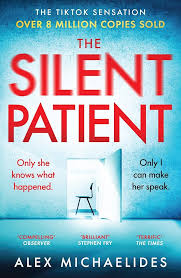
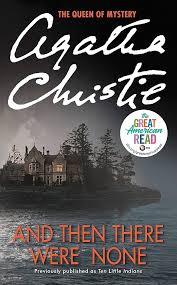
The best audio candidates share a shape: one narrative line, strong voice, momentum that punishes you for stopping. Thrillers with a single reveal are almost purpose-built for it - The Silent Patient by Alex Michaelides depends entirely on forward pull, and And Then There Were None by Agatha Christie is a closed-room countdown that works beautifully read aloud, which is how a great many people first met it on radio.
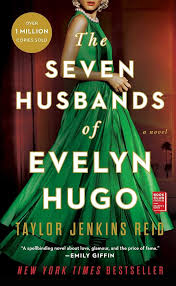
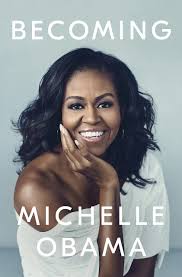
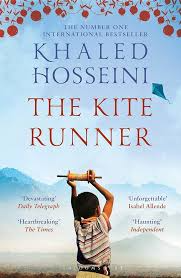
Anything written as a voice is a natural fit. The Seven Husbands of Evelyn Hugo by Taylor Jenkins Reid is structured as an interview, so it gains from being spoken rather than losing. Memoir behaves the same way: Becoming by Michelle Obama and The Kite Runner by Khaled Hosseini are both first-person and chronological, the two properties audio handles best.
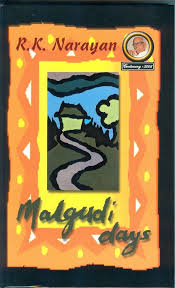
And short fiction is the underrated category here. Malgudi Days by R. K. Narayan is a set of self-contained stories, each finishable inside a single commute, which means the format's worst failure mode - losing the thread between sessions - never gets a chance to happen.
Books That Are Better Held
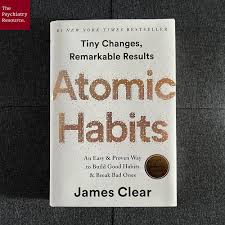
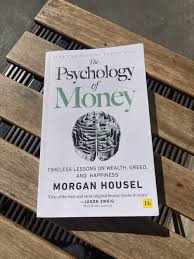
Now the other column, and this is where format choice actually saves you something. Atomic Habits by James Clear is not a book you finish; it is a book you return to when a specific habit breaks. Its value is in the chapter you can find again in eleven seconds. The same is true of The Psychology of Money by Morgan Housel, which is twenty short arguments you will want to re-read one at a time rather than absorb in a single pass.
Dense argument needs the page. Thinking, Fast and Slow by Daniel Kahneman is built on experiments, tables and carefully staged distinctions - exactly the material the research says suffers when you cannot set your own pace. Deep Work by Cal Newport carries a certain irony in audio too, given that its whole thesis is about undivided attention. And The Art of Clarity by Murthy Thevar is designed to be worked through with a pen rather than played in the background; it asks you to stop and apply something before moving on, which is a request audio cannot enforce.
Then there are the books where the object is part of the point. Jaya: An Illustrated Retelling of the Mahabharata by Devdutt Pattanaik has line drawings and margin notes doing real explanatory work, and its cast is far easier to keep straight with a genealogy you can look at. The Bhagavad Gita is verse with commentary, read a few shlokas at a time - a reference text, not a linear one. Wings of Fire by A. P. J. Abdul Kalam is the one people underline and hand on, which is a print behaviour by definition. And Man's Search for Meaning by Viktor Frankl works in either format, but almost everyone who loves it ends up wanting a copy they can mark.
The useful question was never whether listening counts. It is whether this particular book, for this particular purpose, survives being heard once and never returned to.
How to Run Both Formats Without Losing the Plot
- Sort by re-entry, not by genre. Before you buy, ask whether you will open this book a second time. If yes, print. If it is a one-pass narrative, audio is not a compromise - it is the better buy.
- Do not multitask through anything difficult. Save audio for driving, walking and chores, and give it books that can afford a wandering minute. Technical material deserves your eyes.
- Use audio to break a reading slump. The motivation finding in the education research is the practical one. A listened book that gets finished beats a printed book that stalls at page forty.
- Run one of each at a time. A print non-fiction title on the desk and an audio novel on the phone rarely compete for the same attention, so both actually get finished.
- Buy the print copy of the audiobook you loved. If a book turned out to matter, the physical copy is what lets you find the passage again and pass it to someone else. At Indian print prices this is a small decision, not a big one.
Building the print half of your shelf
The evidence is in, and it is kinder than the snobs would like: forty-six studies and nearly five thousand participants say you understand a text about as well whether you read it or hear it. What the evidence does not say is that the two formats are interchangeable. One is for moving through a story; the other is for living with a book. India's audiobook boom is about to make that choice for a lot of readers by default. It is worth making it on purpose instead.