On Thursday, 8 October 2026, a door will open in the Borssalen of the Swedish Academy on Kallargrand in Stockholm, and one name will be read out. That is the entire ceremony of the announcement: no shortlist, no countdown, no envelope handed over on a stage. At 13:00 CEST, which is 4:30 pm in India, the world finds out who has won the 2026 Nobel Prize in Literature. The award itself is presented on 10 December in Stockholm.
That gives Indian readers exactly one month. And unlike the Booker, whose 2026 shortlist arrives on 22 September and gives you six books to choose from, the Nobel offers nothing to read in advance. There is no list. So the interesting question is not who will win. It is what a reader should actually do with the month before the announcement.
The dates that matter
How the Nobel Prize in Literature Is Actually Decided
Almost everything the internet says about Nobel predictions is guesswork, because the process is genuinely closed. Understanding it is worth five minutes, because it explains why the winner so often surprises everyone.
- Nominations open in the previous November. Thousands of letters reach the Swedish Academy, but only qualified nominators count: members of the Academy and comparable institutions, professors of literature and linguistics, previous laureates in Literature, and chairs of national writers' organisations.
- Nominating yourself disqualifies you. This is a real rule, and it has ended real campaigns.
- Nominations are supposed to stay secret. Some nominators announce theirs anyway, which is where most of the annual speculation comes from. The Academy's own records stay sealed for fifty years.
- A Nobel Committee does the reading. For 2026 it is chaired by the literary historian Anders Olsson, with novelists and critics including Ellen Mattson, Anne Sward, Steve Sem-Sandberg and Anna-Karin Palm.
- The prize goes to a body of work, not a book. Alfred Nobel's will asks for the most outstanding work "in an idealistic direction". That phrase has been interpreted very broadly for over a century, which is precisely why the winner can be a novelist, a poet, a playwright, a memoirist or, once, a songwriter.
There is one delightful, semi-public tell. The Swedish Academy's Nobel Library quietly acquires the works of authors under consideration, and its catalogue is searchable. Nobody treats it as proof, but every October a small international sport breaks out around which writers have suddenly accumulated forty or fifty volumes on those shelves.
Last Year's Winner, and Why It Is Worth Knowing
The 2025 prize went to the Hungarian novelist Laszlo Krasznahorkai, cited for a body of work that, in the Academy's words, reaffirms the power of art in the midst of apocalyptic terror. He was the second Hungarian laureate after Imre Kertesz in 2002. If that name meant nothing to you last October, you were in the company of most of the reading world, and that is the point: the Nobel is not a bestseller list. It is an argument about what literature is for, made once a year by eighteen people in Stockholm.
The Booker tells you what to read this year. The Nobel tells you what a lifetime of writing was worth. One is a recommendation; the other is a verdict.
The India Question: One Laureate in 125 Years
India has exactly one Nobel laureate in Literature, and he won it in 1913. Rabindranath Tagore was the first non-European to receive the prize, awarded largely on the strength of his own English translation of Gitanjali. In the 113 years since, no writer holding an Indian passport has won it again. Rudyard Kipling, who took the prize in 1907, was born in Bombay. V.S. Naipaul, the 2001 laureate, was Trinidadian of Indian descent. Neither closes the gap.
Two Indian names do appear consistently in the annual Nobel conversation. Amitav Ghosh sits on the Nobel Library's list of well-stocked authors with dozens of volumes, and was among the favourites named by The Guardian and El Pais ahead of last year's announcement. Anita Desai, twice shortlisted for the Booker across her career, is similarly represented. Whether either wins is unknowable. What is knowable is that Indian writing in English has never had a better claim, and that the best response to a prize you cannot predict is to read the tradition it might recognise.
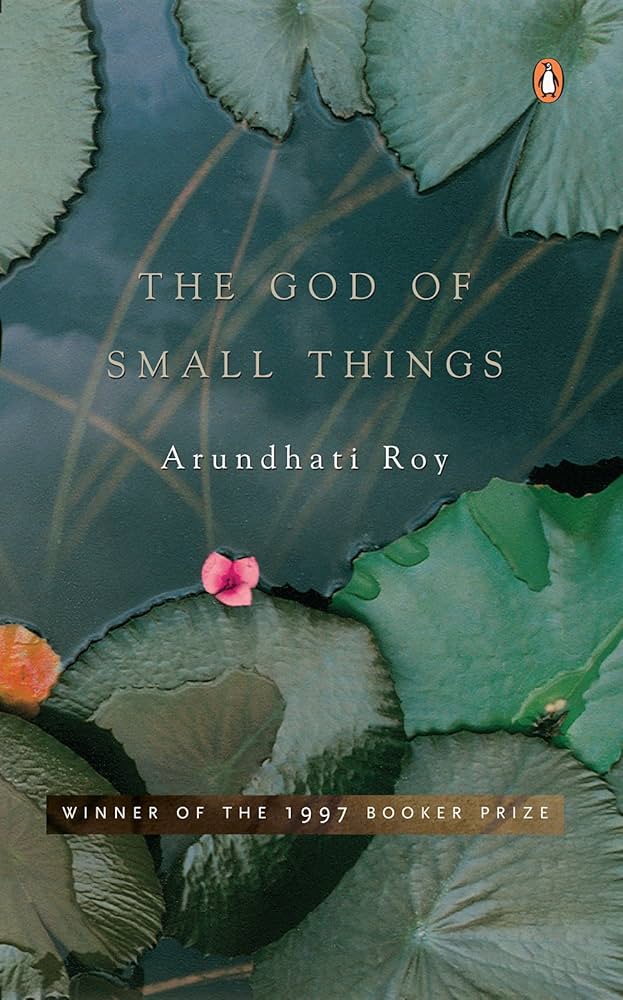
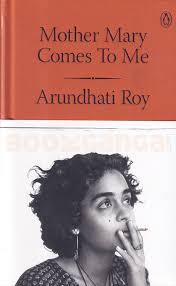
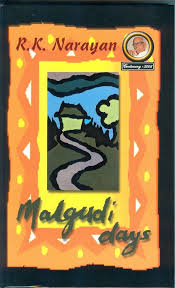
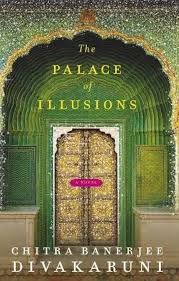
Start with The God of Small Things, still the most linguistically fearless novel written in Indian English, and follow it with Arundhati Roy's memoir Mother Mary Comes to Me, which reads like the private ledger behind the fiction. Then go backwards to Malgudi Days by R.K. Narayan, where an entire country was assembled out of one small town and a great deal of restraint, and to The Palace of Illusions, which does to the Mahabharata what the best contemporary fiction does to any inherited story.
Read a Laureate: The Shortest Route In
The most satisfying way to spend the next four weeks is to read a Nobel laureate you have been meaning to get to. Two are on Indian shelves at paperback prices right now.
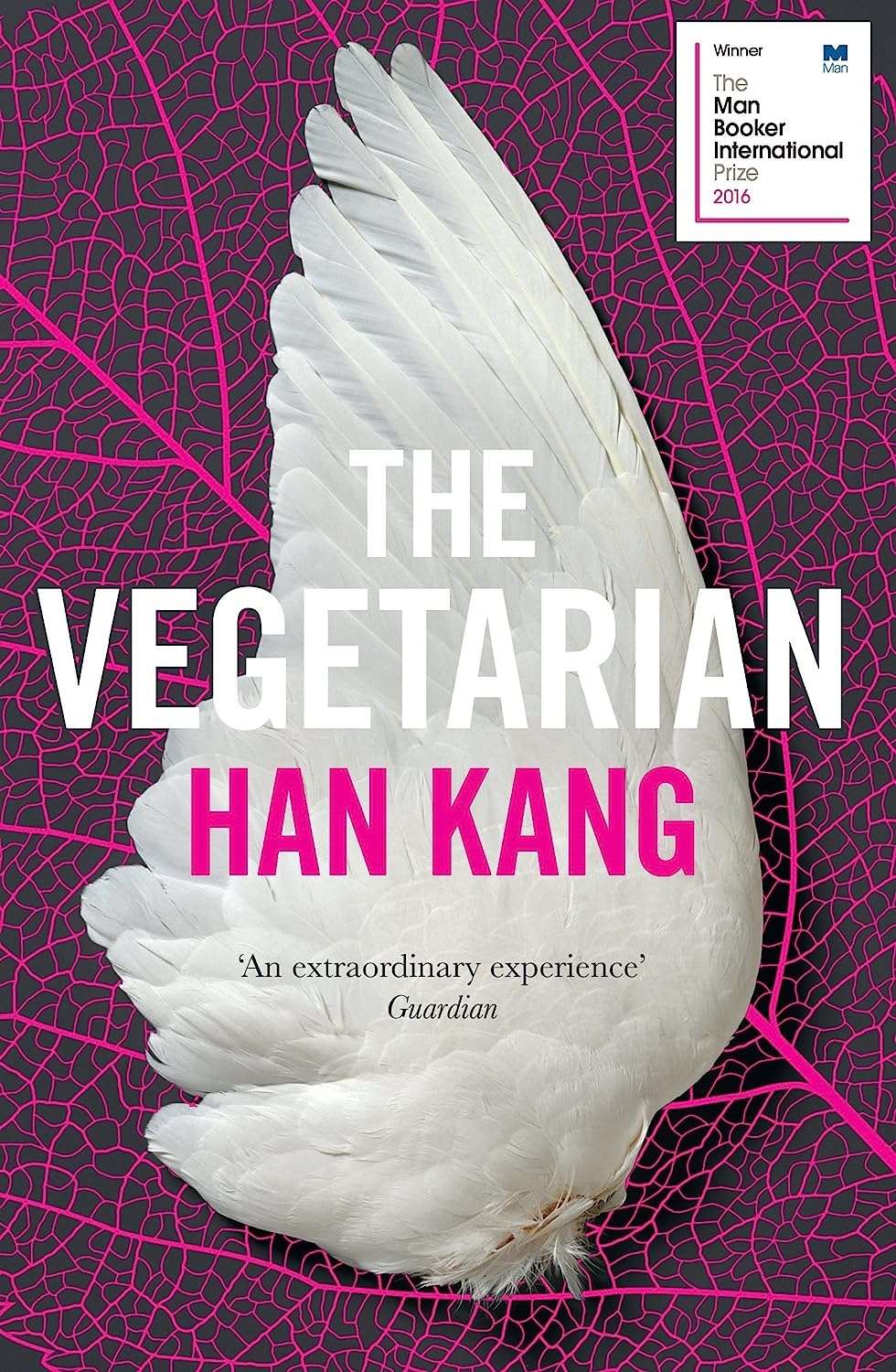
- Han Kang, laureate 2024. The Vegetarian is short, disturbing and impossible to put down or forget. A woman stops eating meat and her family treats it as an act of war. It is the fastest way to understand why the Academy went to South Korea.
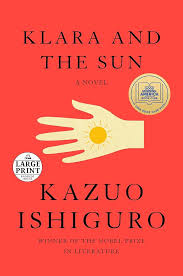
- Kazuo Ishiguro, laureate 2017. Never Let Me Go is the one that quietly breaks people, and Klara and the Sun is the same sensibility turned on artificial intelligence, written by a laureate at full power. Read either and you will understand the Academy's phrase about the emotional force beneath our illusory sense of connection.
Read the Eternal Contender: Haruki Murakami
No living writer is more thoroughly associated with the Nobel Prize without having won it. Every October, Murakami is on the favourites list. Every October, his readers in Tokyo gather and go home disappointed. It has become a genuine literary ritual, and it is a good excuse to read him.
If you have never started, Norwegian Wood is the entry point: no talking cats, no parallel worlds, just grief and Tokyo in the late sixties, and it is the book that made him famous in Japan. Kafka on the Shore is the full strange machinery. Men Without Women is seven stories and the least demanding way to find out whether he is for you before 8 October.
The Great Writers the Nobel Never Reached
It is worth remembering how fallible this prize is, because it makes reading feel less like obedience. Leo Tolstoy was alive for the first nine years of the Nobel Prize and never received it, which remains the single most quoted failure in the Academy's history; Anna Karenina and War and Peace did not require the committee's approval to become permanent. Franz Kafka died in 1924 almost unpublished, and The Metamorphosis went on to give the language an adjective. Fyodor Dostoevsky died two decades before the prize existed, which is the only reason Crime and Punishment is not on the list.
A prize is a spotlight, not a certificate of quality. Read the laureates because the Academy points at interesting things, not because a committee has told you these are the only books that count.
If Translated Fiction Feels Intimidating, Start Small
The honest obstacle for many readers is that Nobel literature sounds like homework. The fix is to start with translated fiction that is short and genuinely enjoyable, and let the appetite build. Before the Coffee Gets Cold is four linked stories in a Tokyo cafe where you can travel back in time for as long as one cup stays warm; it is the gentlest possible introduction to Japanese fiction in translation. Butter by Asako Yuzuki is the opposite in temperature, a novel about food, misogyny and a convicted con woman, and it moves like a thriller.
For non-fiction readers who want the same weight without the fiction, Man's Search for Meaning by Viktor Frankl does in under two hundred pages what most literature attempts in a thousand, and Sapiens remains the best single argument for why stories are the technology that built the species.
A Four-Week Reading Plan for the Run-Up
- Week one (8 to 14 September): read one short laureate. The Vegetarian at around 180 pages fits inside a week of ordinary evenings.
- Week two (15 to 21 September): read the eternal contender. Men Without Women if you want stories, Norwegian Wood if you want to commit.
- Week three (22 to 28 September): the Booker shortlist lands on 22 September. Compare the two prizes deliberately and notice how differently they think.
- Week four (29 September to 7 October): read something in translation from a language you have never read from. This is where surprise laureates come from.
- 8 October, 4:30 pm IST: refresh nobelprize.org, find out you had never heard of the winner, and enjoy the fact that there is always more.
One book that fits any of those weeks for a different reason: The Art of Clarity by Murthy Thevar. Prize season is noise season, with longlists, odds, hot takes and shortlists competing for the same attention. Reading well through it is mostly a question of deciding what deserves your attention and ignoring the rest, which is exactly the problem that book takes apart.
Reading a laureate should not be expensive
The Nobel Prize in Literature has been wrong often enough to be humbling and right often enough to be indispensable. On 8 October it will point at one writer out of everyone alive, and most of the world will spend the following week finding out who that is. The readers who enjoy that week most are the ones who spent the month before it reading, rather than predicting.