World Alzheimer's Day falls on Monday, 21 September 2026, and this year's theme from Alzheimer's Disease International is blunter than usual: The Earlier You Know, The More You Can Do: A Dementia Diagnosis Matters. The argument behind it is that roughly two-thirds of people living with dementia worldwide have never received a formal diagnosis, which means they are locked out of medication, care planning, legal protections and support that only unlock once somebody writes the word down.
For a bookshop, the honest question on a day like this is not whether reading cures anything. It does not. The more useful question is narrower and more answerable: what does the evidence actually say about reading and an ageing brain, and which books help a family that is living through this right now. This piece takes both seriously, and tries not to sell you hope that is not in the literature.
World Alzheimer's Day 2026 at a glance
The claim you have seen, and what the research actually supports
Every September a wave of posts appears claiming that reading prevents Alzheimer's. That is not what the studies show, and the overstatement does real harm, because it quietly implies that people who develop dementia did not read enough. They did. Dementia is not a failure of effort.
What the research does support is a concept called cognitive reserve. The idea is that a brain with a denser history of education, language, complex work and mentally demanding leisure can sustain more underlying pathology before symptoms cross the threshold into visible impairment. A systematic review and meta-analysis published in 2024 found protective associations for cognitive reserve built in early life, mid-life and late life, with the strongest effect where reserve accumulated across both early and later years. Long-running cohort studies have also found that higher reading frequency in older adults tracks with slower measured cognitive decline, and in at least one fourteen-year follow-up that association held even among participants with low formal education.
Two caveats matter and are usually left out. First, almost all of this is observational: people who read a lot differ from people who do not in income, health, hearing, social contact and a dozen other things, and statistical adjustment only goes so far. Second, reverse causation is a genuine problem, because the earliest phase of dementia can reduce reading years before diagnosis, which makes light reading look like a cause when it may be an early effect.
Reading is not a vaccine. It is closer to a savings account: it does not stop the expense arriving, but it changes how long you can absorb it before anything shows on the surface.
Where the Lancet Commission puts reading, precisely
The 2024 Lancet Commission on dementia prevention, intervention and care identified fourteen modifiable risk factors that together account for a theoretical 45 per cent of dementia cases worldwide. The list is worth knowing because most of it is unglamorous: low education in early life, hearing loss, high blood pressure, smoking, obesity, depression, physical inactivity, diabetes, excessive alcohol, traumatic brain injury, air pollution, social isolation, and the two added in 2024, high LDL cholesterol in mid-life and untreated vision loss.
Reading is not on that list as a standalone item. But notice how many entries it touches at the edges. Low education in early life is the single largest early-life factor, and literacy is the load-bearing part of education. Untreated vision loss is now a recognised factor, and nothing exposes failing eyesight faster than a page of ten-point type. Social isolation is on the list, and a book club is one of the cheapest structured social commitments available in any Indian city. Depression is on the list, and reading is one of the few leisure activities that reliably holds attention without a feed.
The practical version, in four lines
Books on memory, ageing and mortality, without the sentimentality
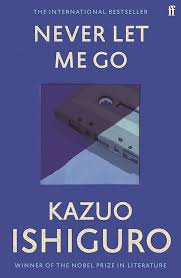
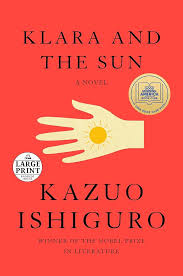
Fiction has been circling memory for a long time, and often gets closer to the experience than the clinical literature can. Never Let Me Go by Kazuo Ishiguro is narrated entirely by someone reconstructing a childhood she is not sure she is remembering correctly, and the unreliability is the point rather than a trick. Klara and the Sun, from the same author, asks what it would mean to preserve a person by learning them well enough, which is the question every family caring for a parent with dementia ends up asking in some form.
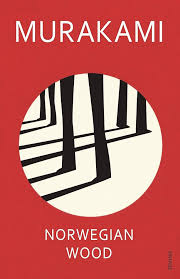
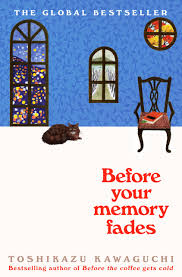
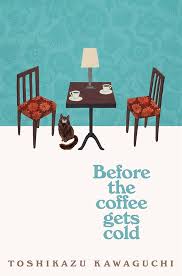
Norwegian Wood opens with a man in his late thirties hearing a song on a plane and realising he can no longer picture a face he once knew completely, which is as precise a description of ordinary memory loss as fiction has produced. For something gentler, Before Your Memory Fades by Toshikazu Kawaguchi is built around a cafe where you can revisit one moment from the past, and it is unashamedly designed to make you call someone afterwards. It reads well after Before the Coffee Gets Cold, the first in the same sequence.
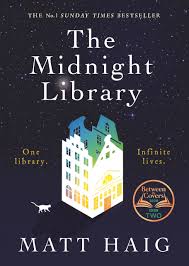
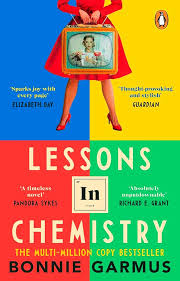
Two more novels for the pile, chosen because they are about lives being counted rather than illness specifically. The Midnight Library by Matt Haig is a book about regret that goes down easily and is very often the title that restarts a lapsed reading habit. Lessons in Chemistry by Bonnie Garmus is funnier and angrier than its cover suggests, and it is a good choice for a parent who says they have stopped enjoying novels.
Non-fiction that is genuinely useful on brain and body
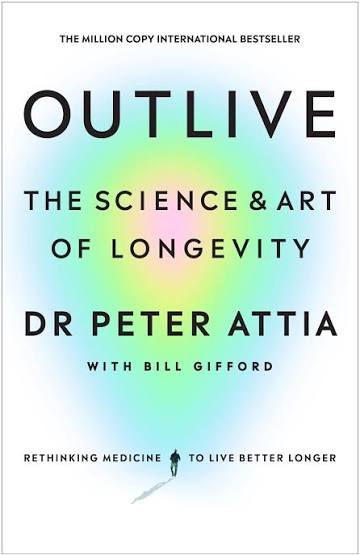
- Outlive by Peter Attia. The most thorough popular account of the shift from treating disease late to managing risk decades early, with a long section on cognitive decline that takes the vascular contribution seriously. Opinionated and sometimes further ahead of the evidence than it admits, but the framing is the value.
- Why We Sleep by Matthew Walker. Sleep is one of the few daily levers with a plausible mechanistic link to brain clearance, and this is the book that put that on the public agenda. Read it knowing that some of its stronger claims have been contested since publication.
- Thinking, Fast and Slow by Daniel Kahneman. Not a health book, but the best available map of how ordinary cognition works, which makes it much easier to tell the difference between normal forgetting and something worth investigating.
- The Body Keeps the Score by Bessel van der Kolk. Useful here for a specific reason: caregiver strain is a serious and under-discussed health outcome in Indian families, where the work usually falls on one daughter or daughter-in-law without relief.
- When Breath Becomes Air by Paul Kalanithi. A neurosurgeon writing while dying, on what makes a life worth continuing when the capacities you built it around are going. Short, and the least sentimental book on this list.
- Tuesdays with Morrie by Mitch Albom. Sentimental, admittedly, and still the book most often pressed into the hands of someone who has just been told a parent is declining. There is a reason it keeps working.
- Man's Search for Meaning by Viktor Frankl. Roughly a hundred and fifty pages on retaining agency inside a situation you did not choose and cannot leave, which is the exact shape of long-term caregiving.
Building the habit, if you are starting from almost nothing
The reading frequency studies are about sustained habits measured over years, not bursts. So the useful question is not what to read but how to still be reading in March. Atomic Habits by James Clear remains the most practical book on that problem, and its central insight applies neatly here: make the page easier to reach than the phone. Ikigai by Hector Garcia and Francesc Miralles is thinner on evidence than it pretends, but it is worth reading for one idea that the longevity literature does support, which is that structured purpose and daily social contact track with healthier ageing.
For Indian readers with an older parent in the house, two titles do better than anything imported. Wings of Fire by A. P. J. Abdul Kalam is the book most likely to be read aloud across three generations without anyone objecting, and reading aloud is one of the better ways to keep a shared routine when independent reading gets harder. The Bhagavad Gita works the same way for many families, in short passages rather than long sittings, and familiarity is a feature rather than a limitation when memory is unreliable.
A note on clarity, which is the part you can still control
One thing families consistently underestimate is how much harder this gets when nobody has written anything down. Who holds the medical file. What the neurologist actually said, as opposed to what everyone remembers hearing. Who is paying for what. The Art of Clarity by Murthy Thevar is not a book about dementia, but it is about the discipline of reducing a situation to what is actually true and actually decided before you act on it, and that skill is worth more in a caregiving year than almost any other. Keep a single shared notebook. Date every entry. It sounds trivial and it is not.
What to actually do on 21 September
- If a parent's memory has worried you for more than a few months, book the appointment this week rather than waiting for something undeniable. The whole point of this year's theme is that the delay between first symptom and diagnosis is measured in years, and everything useful sits on the far side of that diagnosis.
- Get hearing and vision checked, for them and for yourself. Both are on the Lancet Commission list, both are cheap to test, and both are routinely dismissed as ordinary ageing.
- Find out whether there is a dementia support group or memory clinic near you. ARDSI, the Alzheimer's and Related Disorders Society of India, runs chapters in many cities and is the usual starting point.
- Start or restart one shared reading ritual, however small. Twenty minutes aloud after dinner counts. So does a book club that meets once a month.
- Read one book on this list yourself rather than buying it for someone else. Caregivers are the group most likely to buy the book and never open it.
Every title mentioned here is on TheBookX, where books start from ₹1, delivery is free across India and Cash on Delivery is available on every order. If you are sending one to a parent in another city, gift wrapping is available for ₹25.