On 6 September 2026, Singapore's National Library Board launched ReadSG, a five-year national reading movement timed to the country's first National Reading Month. The mechanic is the part everyone is talking about: log a reading session of roughly fifteen minutes a day on CrowdTaskSG, the crowdsourcing platform run by GovTech, and you collect virtual coins. A thousand coins converts to one Singapore dollar. NLB chief executive Melissa Tam described it at the July briefing as a deliberate gamification push against the drift toward short-form, skimmable content, and a parallel track called Read for Good lets you route the same effort to charity instead of your own pocket.
Do the arithmetic and the payout is almost comically small. At the rates being discussed, you would need something like fifty logged sessions to clear your first dollar. Nobody is funding a holiday on this. Which is exactly why the scheme is interesting: the money is not the point, the friction is. Singapore has decided that the hardest part of reading in 2026 is not cost or access, both of which its libraries solved decades ago. It is getting a person to open a book instead of a feed for fifteen minutes.
ReadSG at a glance
The crisis is real, but it is not the one in the headlines
The number doing most of the work in coverage of ReadSG is that only 28 percent of Singaporean adults read books more than once a week, from NLB's own 2024 National Reading Habits Study. That figure is accurate. It is also incomplete. The same study found 89 percent of adults read something, whether books, news or online articles, more than once a week, up from 80 percent in 2016. People are reading more words than ever. They are reading fewer books.
The softer signal is the one worth paying attention to, and Tam cited it separately: the share of Singapore students and parents who say they enjoy reading a lot has fallen from around 60 percent in 2011 to roughly 50 percent now, per the Progress in International Reading Literacy Study. That is not a frequency problem. It is a pleasure problem. And pleasure is not something a coin ledger can restore.
If any of that sounds familiar, it should. The Indian version of this story does not need a government scheme to be visible. Most people reading this owned more unfinished books in 2026 than in 2016, and the reason is not that books got worse.
Why fifteen minutes is the right number
Fifteen minutes is not an arbitrary choice by a committee. It is small enough that you cannot credibly claim you do not have it, which removes the last honest excuse, and large enough to move a reader through roughly fifteen to twenty pages of ordinary prose. Fifteen pages a day is about 5,400 pages a year. At an average of 280 pages a book, that is nineteen books. Most people who describe themselves as non-readers would be thrilled with nineteen books, and they are one quarter of an hour away from it.
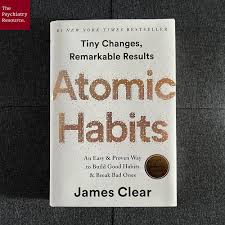
The mechanics of why this works are well documented. Atomic Habits by James Clear is the most useful single book on the subject in print, and its core argument applies directly here: you do not rise to the level of your goals, you fall to the level of your systems. A goal of "read more" has no system attached. A rule of "fifteen minutes before bed, book already on the pillow" does. Clear's four laws, make it obvious, attractive, easy and satisfying, are essentially what ReadSG has implemented at national scale, with the coins doing the satisfying.
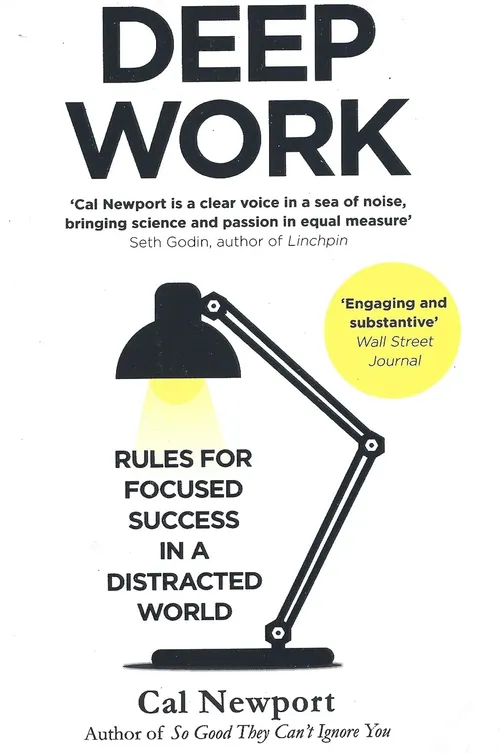
For the attention side of the problem, Deep Work by Cal Newport makes the case that the ability to concentrate without distraction is becoming simultaneously rarer and more valuable, which is a reasonable description of what fifteen uninterrupted minutes with a book actually trains. Dopamine Detox is the blunter, shorter companion: it deals with the specific mechanism, the cheap reward loop, that makes the phone beat the book at ten at night. Read the two together and the ReadSG design stops looking gimmicky and starts looking like applied behavioural science.
The honest caveat about paying people to read
The fifteen-minute starter shelf
The single biggest mistake people make when restarting a reading habit is picking a book that signals ambition rather than one they will actually finish. A 700-page classic on the nightstand is a daily reminder of failure. A 180-page book you finish in eleven days is a daily reminder that you are a person who reads. Start with the second kind. Here is what actually works in fifteen-minute sittings.
Short books you will finish in under two weeks
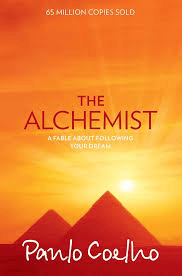
- The Alchemist by Paulo Coelho — the standard re-entry book for a reason. Short chapters, simple prose, no plot you have to hold in your head between sittings.
- Animal Farm by George Orwell — barely a hundred pages, and among the few genuinely canonical works you can finish in a week of fifteen-minute sessions.
- The Metamorphosis by Franz Kafka — a novella you can read in three sittings that will occupy you for considerably longer than that.
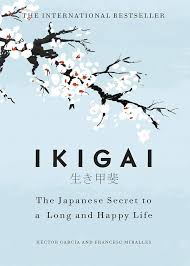
- Ikigai by Hector Garcia and Francesc Miralles — light, well-paced, and structured in sections that end cleanly, which matters enormously when you are reading in short bursts.
Books built out of short pieces
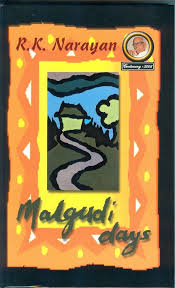
Books assembled from self-contained chapters are the natural format for a fifteen-minute habit, because you finish something every single day rather than stopping mid-scene. Malgudi Days by R. K. Narayan is the obvious Indian choice: thirty-two short stories, each a complete world, each readable in one sitting. The Psychology of Money by Morgan Housel does the same thing for non-fiction with twenty short standalone chapters, and is probably the most-finished personal finance book in India for precisely that reason.
The Art of Clarity by Murthy Thevar belongs in this group too. It is written in short, self-contained sections about thinking and communicating clearly, which makes it unusually well suited to reading in fifteen-minute slices, and its subject, cutting through noise to the thing that actually matters, is about as on-theme as a book can get for anyone trying to reclaim attention from a feed.
Page-turners for when discipline fails
Some evenings willpower will not show up, and the correct response is not to try harder but to read something engineered to pull you forward. The Silent Patient by Alex Michaelides and And Then There Were None by Agatha Christie both do this: short chapters, constant forward motion, and the specific problem of the fifteen-minute timer going off and you ignoring it. The Midnight Library by Matt Haig sits between the two moods, readable and quietly serious at once.
When you are ready for something with more weight
Once three or four weeks of the habit are behind you, the ceiling rises on its own. Wings of Fire by A. P. J. Abdul Kalam is the natural next step for most Indian readers, plain-spoken and genuinely moving. The God of Small Things by Arundhati Roy asks considerably more of you, and rewards it. Neither is a book to begin a habit with. Both are excellent books to discover you can now read.
A seven-step version of ReadSG you can run yourself
- Pick a time, not a duration. "Fifteen minutes a day" fails; "fifteen minutes after dinner" works, because it attaches the new habit to an existing one.
- Leave the book where your body already goes. On the pillow, on the dining table, in the bag you carry to work. Visibility does most of the work.
- Put a real timer on. Fifteen minutes with a timer feels deliberate and finite. Fifteen minutes without one feels like an open-ended commitment, and your brain will negotiate.
- Start with a book under 200 pages. The first finish is worth more than the first great book. Momentum compounds; taste can wait.
- Give yourself permission to abandon. A book you are dragging yourself through is actively destroying the habit. Fifty pages is a fair trial.
- Track the streak, not the pages. A calendar with crosses on it is the cheapest version of ReadSG's coin ledger and works on the same principle.
- Keep the next book already bought. The three-day gap between finishing one book and choosing the next is where most reading habits quietly die.
A nation of readers who are curious, thoughtful, discerning and equipped to navigate an increasingly complex world. That is the stated goal of ReadSG, and it is worth noticing that none of those four words are about how many books you get through.
What this means for Indian readers
Singapore can afford to pay for attention because it already solved access. India is at a different point on the curve. Our libraries are uneven, bookshops are thinning outside the metros, and for a very large number of people the barrier is still the sticker price on a paperback, not the fifteen minutes. That is the specific problem an India-first online bookstore exists to solve, and it is the reason our pricing works the way it does.
On TheBookX, books start from ₹1, delivery is free anywhere in India, and Cash on Delivery is available on every order, so you can test a fifteen-minute habit without paying for the privilege of finding out whether it sticks. Gift wrapping can be added at ₹25 per book if you are sending one to someone who keeps saying they want to read more. The cheapest possible experiment is to buy three short books, put one on your pillow tonight, and see where you are in three weeks.
Singapore is offering its citizens roughly two cents a day to do this. You can skip the coins. The books are the payout.