On Saturday 26 and Sunday 27 September 2026, the Neev Literature Festival returns to Neev Academy in Yemalur, Bengaluru, for two days built entirely around children and books. Not children as a side track at an adult literature festival. Children as the whole point: author interactions, illustration and storytelling workshops, performances, and the announcement of the Neev Book Award, which at ₹3 lakh is India's most valuable prize for children's literature.
Last year's edition drew more than five thousand readers across two days, with around eighty authors, over 130 sessions and roughly two thousand books on the floor. That is a serious festival by any measure. What makes it worth writing about from outside Bengaluru is the argument underneath it, which applies to every Indian household with a child in it: Indian children are reading, but they are mostly reading books set somewhere else.
Neev Literature Festival 2026: the details
The Number That Explains Indian Children's Publishing
The festival's own research report on children's literature in India put the size of the entire Indian children's trade book market at roughly ₹720 crore, against a population of about 43 crore people under the age of eighteen. Divide one by the other and you get somewhere near ₹17 of children's books bought per Indian child per year. That is less than a single paperback, spread across a childhood.
Textbooks are not in that figure, and that is the whole problem in one line. India spends enormous sums on what children are made to read and almost nothing on what they choose to read. The gap matters because reading for pleasure, not reading for marks, is what actually builds vocabulary, attention span and the habit of finishing things. A child who only ever meets books as homework learns that books are homework.
Why 'Indian Stories' Is Not a Sentimental Requirement
The Neev Book Award's stated aim is to recognise writing that leads to a fuller understanding of India, Indian lives and Indian stories, so that Indian children see aspects of themselves and their world reflected in what they read. It is easy to read that as flag-waving. It is not. It is a comprehension argument.
A seven-year-old in Coimbatore reading about a snowy Christmas, a boarding school in Yorkshire and a trip to the corner drugstore is doing two jobs at once: decoding the sentence, and reconstructing a world she has never seen. Give the same child a story set in a town with a temple tank, a power cut, a grandmother who tells stories through the afternoon, and one of those jobs disappears. Fluency comes faster because the background is already loaded. That is also why the best imported books still work brilliantly once a child is fluent, and why they are the wrong place to start.
Children's publishing in India is key to human development and cultural advancement. However, the spend on children's trade books in India is miniscule compared to other developing and developed nations. — The NLF Report on Children's Literature in India
How the Neev Book Award Actually Works
The award was instituted in 2018 and originally split across four age bands — Early Years, Emerging Readers, Junior Readers and Young Adult. From 2024 it changed shape: a single shortlist across all ages, with an age recommendation attached to each title, and one winner.
- The winner receives ₹3 lakh, a trophy and a certificate, presented at the festival.
- Every shortlisted title receives ₹1 lakh, of which ₹50,000 goes to the awardee and the rest funds a book promotion tour for that title.
- The shortlist is deliberately built so that any title on it is a genuine contender, which makes the shortlist itself a usable reading list rather than a set of runners-up.
- Recent winners include The Henna Start-Up by Andaleeb Wajid in 2024 and Baloo's Big Win in 2025. Earlier winners include The People of the Indus, Misfit Madhu, The Sweet Shop Wars and My Street.
- Separately, the NLF Fellowships put ₹6 lakh behind writers and illustrators to produce ambitious, research-heavy children's books rooted in Indian life.
That last point is the unusual one. Most literary prizes reward books that already exist. A fellowship pays for the eighteen months an illustrated non-fiction book about the Indus Valley actually takes, which is the real reason such books are rare here.
Indian Children's Books to Start With
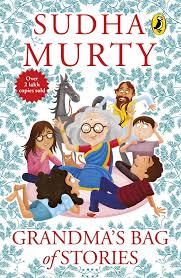
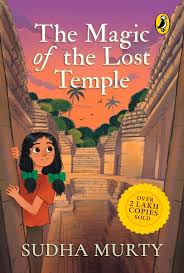
If you cannot get to Bengaluru on 26 September, the useful version of attending is buying a child a book set in a place they recognise. Sudha Murty is the obvious entry point and the reason is craft, not fame: her sentences are short, her settings are small-town Indian, and her plots resolve. Grandma's Bag of Stories is the standard first gift for a six-to-ten-year-old, and The Magic of the Lost Temple is the one that converts reluctant readers, because a city child goes to a village for the summer and finds a genuine mystery.
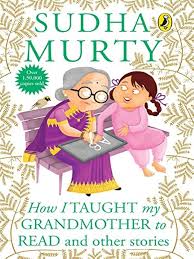
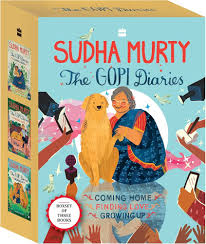
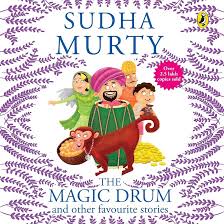
How I Taught My Grandmother to Read is a short-story collection that works for slightly older readers and doubles as an argument for literacy that no adult has to deliver out loud. The Gopi Diaries (Set of 3) is narrated by a dog and is the safest bet for a child who has decided, aged eight, that they do not like books. For folk tales with a lighter touch, The Magic Drum is built for reading aloud, one story a night.
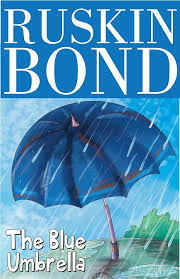
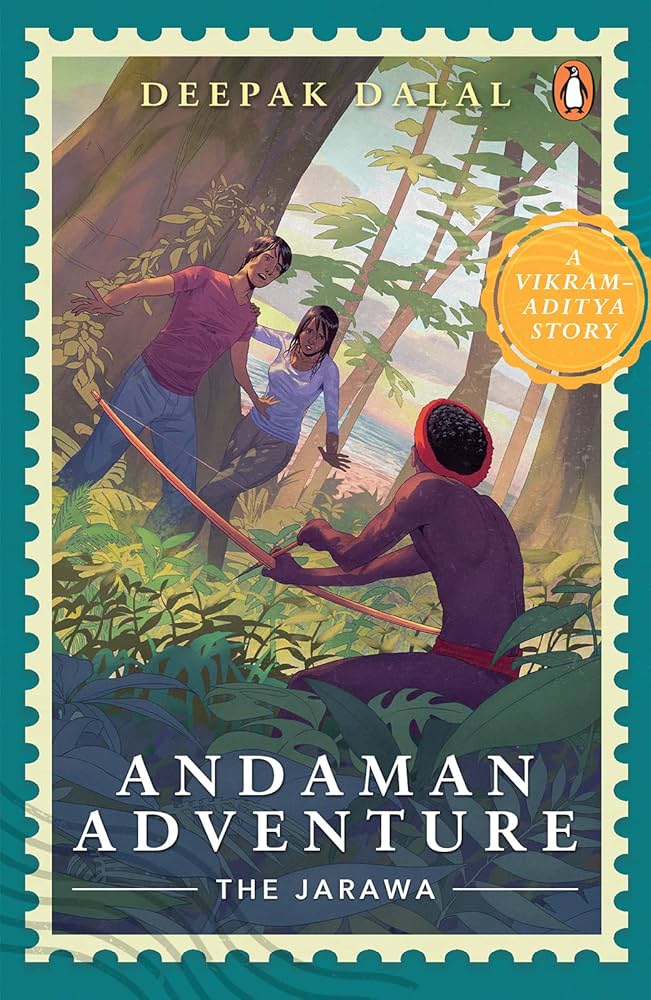
Ruskin Bond is the other pillar, and The Blue Umbrella is the cleanest short novel in Indian children's writing — a hundred-odd pages set in a Garhwal village, about envy and forgiveness, finishable in one sitting by a nine-year-old. For a slightly older reader who wants plot, Deepak Dalal's Andaman Adventure does what Indian adventure writing rarely does: real geography, real wildlife, actual peril.
Mythology That Does Not Talk Down
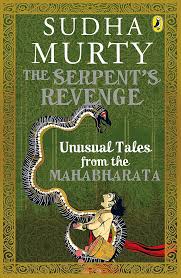
Retellings are where Indian children's publishing is strongest, partly because the source material is inexhaustible. The Serpent's Revenge and The Upside-Down King collect the strange, lesser-known corners of the Mahabharata and Ramayana rather than the episodes every child has already heard four times. Roopa Pai's The Gita: For Children is the rare book that treats a philosophical text as something a twelve-year-old can argue with, which is exactly the right register.
For teenagers moving past retellings into literary fiction, R.K. Narayan's Malgudi Days remains the bridge. The stories are short enough to read between classes and good enough to reread at thirty.
The Imported Books Worth Buying Anyway
None of this is an argument against Harry Potter. A child who is already fluent should read whatever keeps them turning pages, and the Harry Potter Series Set (Books 1-7) is still the most reliable engine for turning a reader into a heavy reader. Diary of a Wimpy Kid earns its place for a different reason: heavily illustrated, low barrier to entry, and children actually finish it.
Rick Riordan's Percy Jackson Ultimate Collection is the natural next step for a child who liked the Indian mythology retellings, since it runs the same trick on Greek myth. The order that works best is Indian first, imported second, and no guilt about either.
Building a child's shelf without spending much
What Parents Can Take From a Festival They Cannot Attend
- Let the child choose. A festival floor works because a child picks a book off a table for reasons an adult would not endorse. Reproduce that: give a budget, not a list.
- Read aloud past the age it feels necessary. Listening comprehension runs years ahead of reading comprehension, so reading aloud is how you introduce harder books early.
- Buy one book set within two hundred kilometres of where the child lives. The fluency gain from a familiar setting is real and immediate.
- Do not finish bad books. Abandoning a book you dislike is a reading skill, not a failure, and it protects the habit.
- Meet an author if you ever get the chance. A child who has seen a writer be an ordinary person in a room stops treating books as objects that simply exist.
- Track it lightly. Something like the NLF Reading Challenge works because it asks children to talk about what they read, not to hit a page count.
For the Adults in the House
The single strongest predictor of whether a child reads is whether they see an adult reading. If your own shelf has gone quiet, the fix is not ambitious. Wings of Fire by A.P.J. Abdul Kalam is the book most Indian parents can finish and most Indian teenagers will borrow off the table afterwards.
If the problem is that you start books and never finish them, Atomic Habits by James Clear is the practical answer, and The Art of Clarity by Murthy Thevar is the one to read if you want to explain things to a child — or to anyone — without losing them halfway through the sentence. Clear thinking and clear speech are the same skill, and children detect the absence of both instantly.
The Neev Literature Festival takes place on 26 and 27 September 2026 in Bengaluru. The Neev Book Award will hand ₹3 lakh to one Indian children's book. Both of those are good news. The part that is actually in your control is smaller and happens at home: one book, chosen by a child, set somewhere they recognise, finished because they wanted to.